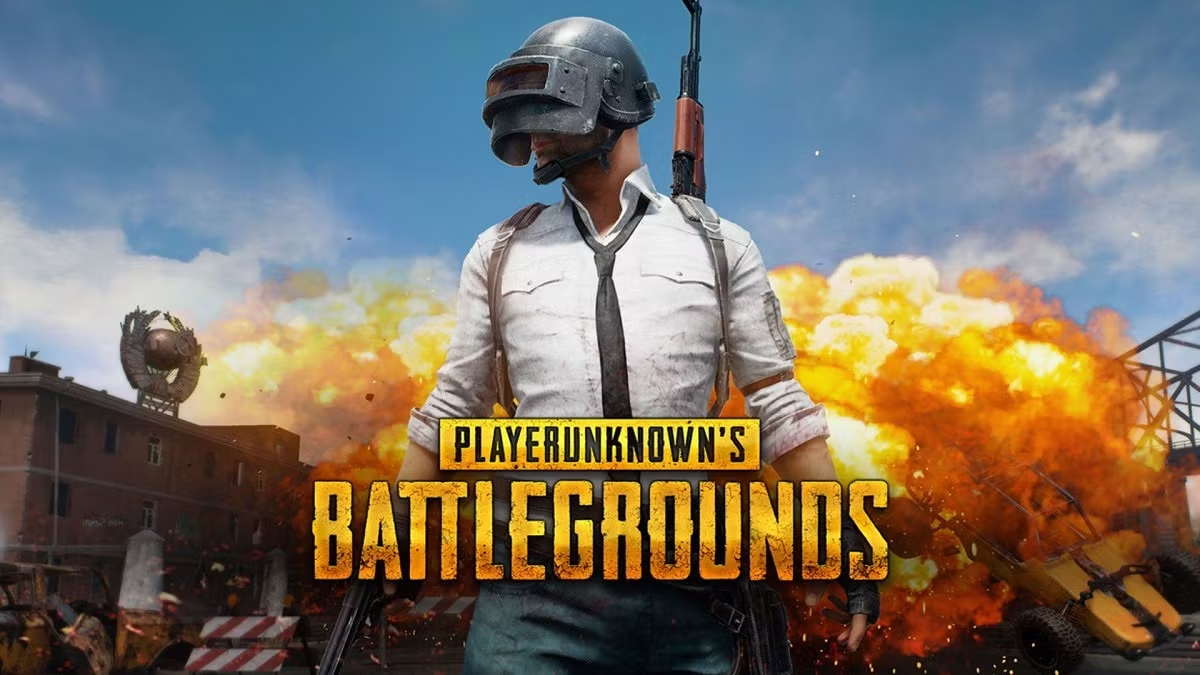
If you’re looking to jump into one of the most popular mobile battle royale games globally, PUBG Mobile delivers an intense, adrenaline-pumping experience that rivals console gaming. With over a billion downloads and counting, this free-to-play survival shooter continues to dominate the mobile gaming landscape in 2026. Whether you’re a complete newcomer or casual gamer curious about the hype, this guide breaks down everything you need to know about gameplay mechanics, the latest updates, and practical strategies to help you survive longer and claim that coveted “chicken dinner” victory.
What Is PUBG Mobile? Understanding the Battle Royale Experience
PUBG Mobile is a mobile adaptation of PlayerUnknown’s Battlegrounds, bringing the authentic battle royale experience to smartphones and tablets. The core gameplay revolves around a straightforward but challenging premise: 100 players are dropped onto an expansive island map, and through looting, tactical decision-making, and combat skills, you fight to be the last player (or team) standing.
The Basic Battle Royale Formula
Each match begins with you aboard an aircraft flying over the map. You’ll choose a landing spot and parachute down, competing with 99 other players for weapons, armor, healing items, and tactical equipment. As the match progresses, a shrinking “safe zone” forces players closer together, intensifying combat. This cycle continues until only one survivor remains. The victory announcement? A celebratory “chicken dinner” message—a fun nod to the original game’s creator.
Why PUBG Mobile Stands Out
Unlike casual mobile games, PUBG Mobile demands real strategy, quick reflexes, and tactical awareness. The gunplay feels weighty and responsive, weapon recoil requires management, and positioning matters as much as aim. You can’t spray and pray your way to victory. This depth explains why millions of players keep returning, from casual mobile gamers to competitive esports enthusiasts grinding ranked seasons.
Key Features & Benefits: What Makes PUBG Mobile Special
Battle Royale Modes with Variety
PUBG Mobile offers multiple game modes catering to different play preferences. Classic Mode delivers the traditional 100-player experience with expansive maps and long matches lasting 25-30 minutes. Arcade Mode features quick matches including quick-play scenarios, sniper training, and War Mode—perfect for practicing specific skills in shorter 10-15 minute bursts. EvoGround brings rotating special modes with unique mechanics like zombie survival and payload battles, keeping the gameplay fresh and exciting.
Multiple Maps with Distinct Gameplay
The game features several maps, each with unique topography and combat characteristics. Erangel, the original map, offers diverse terrain with hot-drop zones like Pochinki and Military Base where early firefights are guaranteed. Sanhok, a smaller jungle-themed map, forces closer encounters and rewards aggressive players comfortable with mid-range combat. Livik and other rotating maps introduce varied strategic elements, ensuring experienced players never feel bored.
Advanced Weapon System and Loadout Customization
The weapon arsenal is extensive and mechanically distinct. Assault rifles like the M416 offer balanced recoil for beginners, while marksman rifles demand precision and timing. Shotguns dominate close quarters, sniper rifles reward patient play from distance, and SMGs excel in tight building combat. Weapon attachments—scopes, grips, magazines, suppressors—dramatically affect performance, allowing you to fine-tune your loadout for your playstyle.
Regular Updates and Fresh Content
PUBG Mobile releases substantial updates every few weeks. The V4.2 update in January 2026 introduced Primewood Genesis, a nature-themed transformation of Erangel featuring corrupting vegetation, new weapon skins, and refreshed map locations. Newer features include Season Ascension with Promotion Matches that reward consistent high-tier performance, World of Wonder creative mode with AI-assisted map design, and cross-game collaborations (Dragon Ball Super, football-themed events) that keep casual players entertained.
PUBG Mobile vs. Competitors: How It Compares
PUBG Mobile vs. Call of Duty: Mobile
Call of Duty: Mobile excels in faster-paced arcade gameplay with instant respawns and shorter match durations. However, PUBG Mobile’s survival-focused mechanics feel more strategic and rewarding. If you prefer tactical positioning over gunplay reflexes, PUBG Mobile offers deeper satisfaction.
PUBG Mobile vs. Fortnite Mobile
Fortnite emphasizes building mechanics and vertical gameplay, making it more forgiving for casual players. PUBG Mobile removes building, focusing purely on gunplay and positioning—a design choice that feels more realistic and skill-dependent. Competitive players typically prefer PUBG Mobile’s learning curve.
PUBG Mobile vs. Apex Legends Mobile
Apex Legends Mobile features squad-based abilities and fast-paced action. While innovative, it’s less refined than PUBG Mobile’s core experience. PUBG Mobile’s larger player base, established esports ecosystem, and consistent updates make it the more mature choice for serious players.
Comparison Table
| Feature | PUBG Mobile | CoD Mobile | Fortnite | Apex Mobile |
|---|---|---|---|---|
| Match Duration | 25-30 min | 5-10 min | 15-20 min | 12-18 min |
| Player Count | 100 | 100 | 100 | 60 |
| Building Mechanics | No | No | Yes | No |
| Weapon Customization | Excellent | Good | Limited | Good |
| Learning Curve | Steep | Moderate | Moderate | Moderate |
| Esports Scene | Strongest | Moderate | Strong | Emerging |
| Graphics Quality | High | High | Medium | High |
Gameplay Mechanics Explained: Mastering the Fundamentals
Mastering Touch Controls and Device Setup
PUBG Mobile’s touchscreen controls intimidate newcomers, but they’re intuitive once you customize them. The fire button appears on both sides of the screen for ambidextrous play. Adjust the virtual joystick’s size, button spacing, and sensitivity in settings to match your hand size and grip. Many players initially struggle because default settings don’t suit their preferences—spending 10 minutes customizing controls pays dividends in gunfights.
Pro tip: Enable gyroscope aiming if your device supports it. Tilting your phone slightly fine-tunes aim in firefights, adding precision that pure thumbstick aiming lacks. Pair this with lower aim sensitivity (around 8-12) for better accuracy over raw speed.
Strategic Looting and Inventory Management
Looting efficiently separates survivors from eliminated players. Upon landing, prioritize finding a weapon immediately—any weapon beats empty hands. Grab one magazine of ammunition, healing items (energy drinks restore stamina faster than painkillers), and a backpack upgrade to increase carrying capacity.
Don’t hoard items obsessively. A common beginner mistake is carrying 10 first-aid kits but no grenades or utilities. Instead, carry 2-4 healing items, 1-2 grenades or flashbangs, one primary weapon with 120+ ammo, and possibly a secondary weapon. This loadout balances survivability with combat flexibility.
Weapon Recoil Control and Accuracy
Every firearm exhibits distinct recoil patterns. Assault rifles spray upward; you must pull down slightly while firing to maintain accuracy. Marksman rifles fire slower but hit harder, rewarding patient, disciplined shooting. Sniper rifles require leading moving targets and accounting for bullet travel time. Shotguns demand point-blank accuracy but deal devastating damage.
Training Ground is your friend. Spend 20-30 minutes in Training Mode familiarizing yourself with each weapon’s recoil. Watch how the crosshair moves, practice burst firing (short controlled bursts rather than sustained fire), and understand how weapon attachments reduce recoil. This foundation turns lucky kills into consistent eliminations.
Positioning and Zone Awareness
Combat skill matters, but positioning wins matches. Always know where the safe zone is heading—the minimap displays current and next zones. Plan rotations early; getting caught in the blue (damage zone) with no vehicles often means elimination.
High-ground positioning advantages you in gunfights. If enemies are below you, they expose themselves climbing up. Use terrain (rocks, buildings, hills) as cover, never standing in open fields. Peek-and-shoot tactics—popping out briefly to fire then retreating behind cover—let you damage enemies while minimizing return fire.
Understanding the Safe Zone Mechanic
The map divides into grid sections. Every few minutes, the safe zone (white circle) shrinks to a smaller random location. Players outside suffer increasing damage. Early-game zones are large; late-game zones are tiny, concentrating survivors in intense firefights. Plan your rotations using the minimap, and never sprint directly into the zone if enemies might be waiting. Use vehicles strategically to cross large distances quickly.
Latest PUBG Mobile Updates (2026): What’s New and Why It Matters
Primewood Genesis Theme—Fresh Gameplay
The V4.2 update introduces Primewood Genesis, transforming Erangel’s landscape with corrupting nature. Monstrous trees, tangled vegetation, and dynamic roots create new hiding spots and parkour opportunities. Five specific locations—Hospital, Yasnay Polyana, Pochinki, Mylta, and Sosnovka Military Base—feature this theme exclusively, offering different tactical challenges.
The new environment isn’t purely cosmetic. Vine Crates scattered throughout provide valuable loot. Bramblewood Scorpion vehicles offer themed transportation, and nature-inspired weapon skins deliver visual variety. Experienced players must relearn familiar hot-drop zones due to altered building layouts—a welcomed refresh preventing stale meta-gaming.
Season Ascension and Promotion Matches—Competitive Overhaul
PUBG Mobile addressed tier inflation plaguing the ranked system. The new Promotion Match system requires consistent high-tier performance rather than pure point grinding. Players at Crown tier and above must pass skill-based challenges advancing to Ace, Master, and Challenger ranks. This change restores prestige to high ranks—Ace players genuinely represent skilled competitors, not casual grinders.
Season Series introduces long-term objectives spanning six months rather than single seasons. Continuous challenges, trial challenges, and a season treasury offer rewards for sustained excellence. This structure rewards dedication and skill consistency, creating meaningful progression.
Cooperative Parkour and Combat Enhancements
The update enables squad-based parkour mechanics. Players jumping together reach higher platforms than solo players. This encourages team coordination in early-game looting and late-game positioning, rewarding synchronized teamplay. Combat features expanded with doors opening in opposite directions and cut-parachute options, adding micro-decision layers to encounters.
World of Wonder AI Expansion
The creative mode received AI-powered tools. Animation Generation lets players upload videos to create skeletal animations for armed AI opponents. Grouped Object Generation creates scenery via text descriptions, automating tedious visual design. UI scaling, floating window support, and 7-day edit history improvements streamline custom map creation.
Essential Beginner Tips: Your Roadmap to Victory
Tip 1: Choose Landing Spots Strategically
Resist hot-dropping into Pochinki or Military Base—these attract 20+ players guaranteed early eliminations. Instead, land near map centers in less crowded areas like School, Prison, or small unnamed compounds. You’ll find decent loot with fewer immediate threats, letting you gear up safely. After securing weapons and armor, move toward the safe zone before other squads rotate your way.
Tip 2: Master One Weapon Category Initially
Don’t try learning all 20+ weapons simultaneously. Pick one assault rifle (M416 for balance, AK47 for power) and practice exclusively for 20 matches. Only after confident, branch to secondary weapons. This focused approach accelerates skill development faster than scattered learning.
Tip 3: Use Audio Cues to Your Advantage
Sound design is critical. Footsteps, gunfire direction, reload sounds—all provide intelligence. Enable HRTF (Head-Related Transfer Function) in audio settings to accurately pinpoint enemy locations by sound alone. Experienced players close eyes during intense fights, relying purely on audio to track enemies. This isn’t magic; it’s directional awareness.
Tip 4: Embrace Training Mode for Skill Building
Training Mode is unlimited practice with no consequence. Spend hours here mastering spray patterns, recoil control, and sensitivity settings before ranked play. Pro gamers invest hundreds of hours here before their first ranked match. Treating Training Mode as practice, not a waste of time, accelerates your learning exponentially.
Tip 5: Play Smart, Not Aggressive
Beginners equate winning with high kill counts. Wrong mindset. A 2-kill victory beats a 10-kill third-place finish. Survive first, fight second. Avoid unnecessary early-game encounters. Third-partying weakened enemies (attacking after they finish firefighting) beats direct confrontation. Conservative survival gameplay wins more matches than aggressive fragging.
Tip 6: Manage Inventory Like a Pro
Beginners hoard everything. Drop excess items immediately. Optimal loadouts: one primary weapon (AR/DMR), one secondary (pistol or SMG), 2-3 healing items (prioritize energy drinks), 1-2 grenades, utility items (smoke grenades, flashbangs), and level-3 armor with level-2 helmet. Everything else wastes backpack space and slows you down.
Tip 7: Study Map Rotations and Predict Zones
Spend time in Training Mode just exploring maps without combat. Learn loot locations, understand buildings, memorize vehicle spawns. In actual matches, after seeing the first safe zone, mentally predict where subsequent zones might shrink. Position yourself advantageously—if zones consistently trend north, move north earlier than enemies expect. Predicting movement saves your life constantly.
Tip 8: Communicate Effectively with Teammates
If playing squads, communication via voice chat separates winning teams from frustrated randoms. Call out enemy locations, weapons found, rotating times. Stay positive—discouraging teammates tilts them, worsening decisions. Squad-based callouts like “knocked enemy at school 300m” versus vague “guy shot me” determine clutch late-game outcomes.
Tip 9: Analyze Replays of Your Deaths
PUBG Mobile allows watching match replays. After dying, immediately watch your death from the killer’s perspective. What positioning allowed them to kill you? What information did you miss? Did you peek carelessly? Should you have rotated earlier? This reflection accelerates learning faster than playing 100 oblivious matches.
Tip 10: Be Patient and Expect a Long Learning Curve
PUBG Mobile has one of gaming’s steepest learning curves. Expect 50-100 matches before your first victory. Many deaths occur where you never identify the shooter. This frustration is normal, not personal failure. Pros took months reaching this skill level. Consistency over intensity—playing regularly beats intense grinding. Enjoy the process instead of obsessing over winning.
Pros and Cons: Honest Assessment
Advantages
✅ Authentic Battle Royale Experience: PUBG Mobile delivers console-quality gameplay on mobile, with no creative building or power-ups—pure skill-based survival.
✅ Extensive Customization: Weapon attachments, control layouts, graphics settings, and sensitivity tuning offer deep personalization. You’re playing your way, not the game’s way.
✅ Strong Esports Ecosystem: PUBG Mobile Global Championship and regional tournaments offer aspiring pros legitimate competitive pathways with substantial prize pools.
✅ Regular Content Updates: Monthly substantial updates with new maps, modes, themes, and systems prevent gameplay staleness.
✅ Free-to-Play with Cosmetics Only: Unlike pay-to-win competitors, PUBG Mobile monetizes cosmetics (skins, emotes) exclusively. No gameplay advantages from spending.
✅ Cross-Device Compatibility: Progress synchronizes across iOS and Android seamlessly. Play on phone, switch to tablet—same account, same stats.
✅ Active Community: Millions of daily players ensure quick matchmaking and vibrant social engagement.
Disadvantages
❌ Steep Learning Curve: New players face brutal early-game experiences. Expecting 50-100 matches before competitive performance.
❌ Device Performance Requirements: PUBG Mobile demands mid-to-high-end devices for smooth 60+ FPS gameplay. Budget phones experience lag, stuttering, and frame drops, creating unfair competitive disadvantages.
❌ Occasional Server Issues: Regional servers sometimes experience lag spikes, desynchronization, and connectivity problems, especially during update rollouts.
❌ Cheating Prevalence: Anti-cheat systems flag obvious offenders, but aimbotters and wallhackers occasionally appear in matches, particularly in lower-tier ranked play.
❌ Match Variance: Landing, loot distribution, and zone placement involve RNG (randomness). You might land near weapons while enemies loot empty compounds—frustrating but realistic to survival.
❌ Control Complexity: Touchscreen controls, while customizable, require substantial adjustment time compared to console controllers. Precision aiming remains harder on mobile.
❌ Time Commitment: Matches last 25-30 minutes. Casual players struggling to dedicate such time blocks find shorter-match games more accessible.
Frequently Asked Questions
Q1: Is PUBG Mobile truly free-to-play, or is it pay-to-win?
A: PUBG Mobile is genuinely free-to-play with cosmetic-only monetization. UC (paid currency) purchases unlock skins, emotes, battle passes, and cosmetic items exclusively. Zero gameplay advantages exist for spending. You’ll encounter millionaires spending $1,000+ and f2p players ranking higher—skill, not wallet size, determines success.
Q2: How long before beginners see improvement and win matches?
A: Expect 50-100 matches before consistent improvement. Your first 10 matches involve learning controls and dying mysteriously. Matches 11-50 teach fundamental skills like looting, positioning, and weapon basics. Matches 51-100 refine decision-making and combat mechanics. After 200 matches, you’re playing competitively. This timeline assumes regular play (5-10 matches daily).
Q3: Do I need a controller, or can touchscreen controls work competitively?
A: Touchscreen controls are perfectly viable for competitive play. Most top-ranked players exclusively use touchscreen. Controllers offer advantages for players transitioning from console gaming, but touchscreen-trained players beat controller users consistently. Customize your controls, enable gyroscope aiming, and practice extensively. Controller is preference, not necessity.
Q4: What device specifications does PUBG Mobile require for optimal performance?
A: For smooth 60 FPS: iPhones XS and newer, or Samsung Galaxy S10 and newer with 4GB+ RAM. Mid-range phones (Snapdragon 855 or equivalent) handle 30-60 FPS gameplay comfortably. Budget phones (under $200) experience frame drops and stuttering, disadvantaging you in competitive matches. Invest in at least mid-range devices for ranked play.
Q5: Can solo players succeed, or is squad play mandatory for ranking up?
A: Both solo and squad modes exist separately. Solo players rank independently through solo matches. Squads rank through squad-only matches. Your rank reflects your playstyle. Some players rank higher solo (playing cautiously), others excel in squads (coordination). Neither is mandatory—play whatever suits your schedule and skill.
Q6: How frequently does PUBG Mobile receive updates, and are they mandatory?
A: Major updates release monthly (V4.2 in January 2026, for example) with seasonal changes every 6-8 weeks. Updates are mandatory—you cannot play without updating. Updates typically require 1-2GB download. Schedule around maintenance windows when playing competitively to avoid interruptions.
Q7: Are regional servers fairly matched, or do international players face disadvantages?
A: PUBG Mobile operates regional servers (NA, EU, Asia, etc.) with matchmaking within your region. International play involves increased ping (latency), disadvantaging you in shootouts. Play on your regional server whenever possible. Competitive ranked play strictly enforces regional servers.
Q8: How do Promotion Matches differ from traditional ranked progression?
A: Traditional ranking accumulated points toward promotion. Promotion Matches require passing skill-based challenges at Crown tier and above. Instead of grinding points, you prove consistent excellence through specific combat scenarios. This system restores prestige—Ace tier now represents genuine skill, not time investment.
Q9: What’s the current meta (most effective strategy available) for late-game survival?
A: Positioning > Firepower. Late-game circles force all survivors into small zones (typically 100x100m). High-ground cover beats raw weapon damage. Artic ammunition (6.62mm) deals more damage at range; DMRs dominate. Defensive grenades (smokes, frags) control space effectively. Coordinate with teammates, exploit terrain, and avoid unnecessary fights when healing items are depleted.
Q10: Do cosmetics (skins, emotes) affect gameplay performance or matchmaking difficulty?
A: Purely cosmetic. Skins offer zero gameplay advantages. Matchmaking is skill-based (MMR/Elo rating), not cosmetic-based. A player in default clothing with Ace rating plays the same opponents as an expensively-skinned Ace player. Cosmetics are ego and fun—nothing mechanical changes.
Conclusion
PUBG Mobile remains the definitive mobile battle royale in 2026, offering genuine competitive depth, regular content updates, and a thriving global community. Whether you’re chasing that first chicken dinner or grinding toward esports aspirations, this guide provides the foundational knowledge to accelerate your journey.
The 2026 season brings exciting changes—Primewood Genesis refreshes familiar maps, Promotion Matches restore prestige to high tiers, and cooperative parkour enhances squad dynamics. These aren’t gimmicks; they meaningfully evolve the experience.
Remember: PUBG Mobile rewards patience, practice, and intelligent decision-making over raw reflexes. Your first 50 matches feel brutal. Matches 51-150 accelerate your growth exponentially. By match 200, you’re playing genuinely competitive survival.
Start in Training Mode, learn one weapon deeply, and prioritize positioning over frags. Customize your controls, enable gyroscope aiming, and embrace the steep learning curve—it’s what separates PUBG Mobile from casual competitors.
Ready to drop into battle? Download PUBG Mobile, create your account, customize your controls, and land in your first match. Every pro started exactly where you are—uncertain and overwhelmed. The difference? They kept playing. See you on the battlegrounds, and good luck claiming your chicken dinner.
Download PUBG Mobile now on iOS (App Store) or Android (Google Play) and begin your battle royale journey today.